
November Forum: Why Pollinators Matter in Florida
NOVEMBER FORUM
Bees, Butterflies, Bats:
Why Pollinators Matter in Florida
Tri-County Unitarian Universalists
7280 SE 135th Street
Summerfield, FL 34491
4 p.m., potluck following
Speaker:
Maxine Hunter, Agriculture and Natural Resources Agent, UF/IFAS Extension Marion County
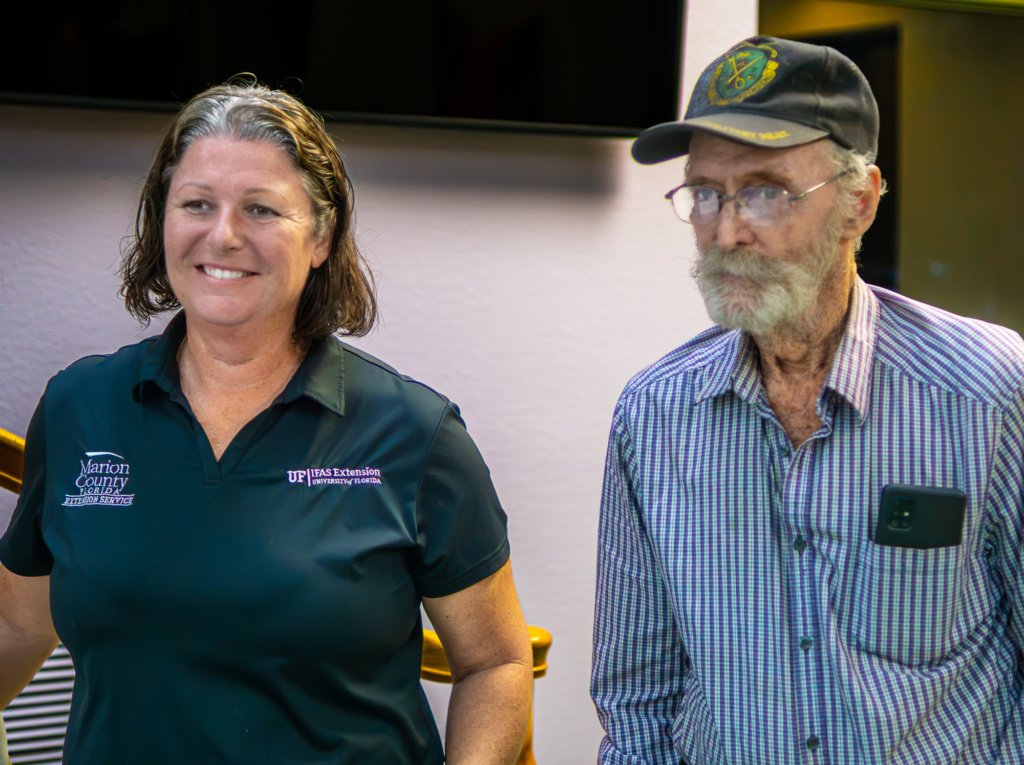
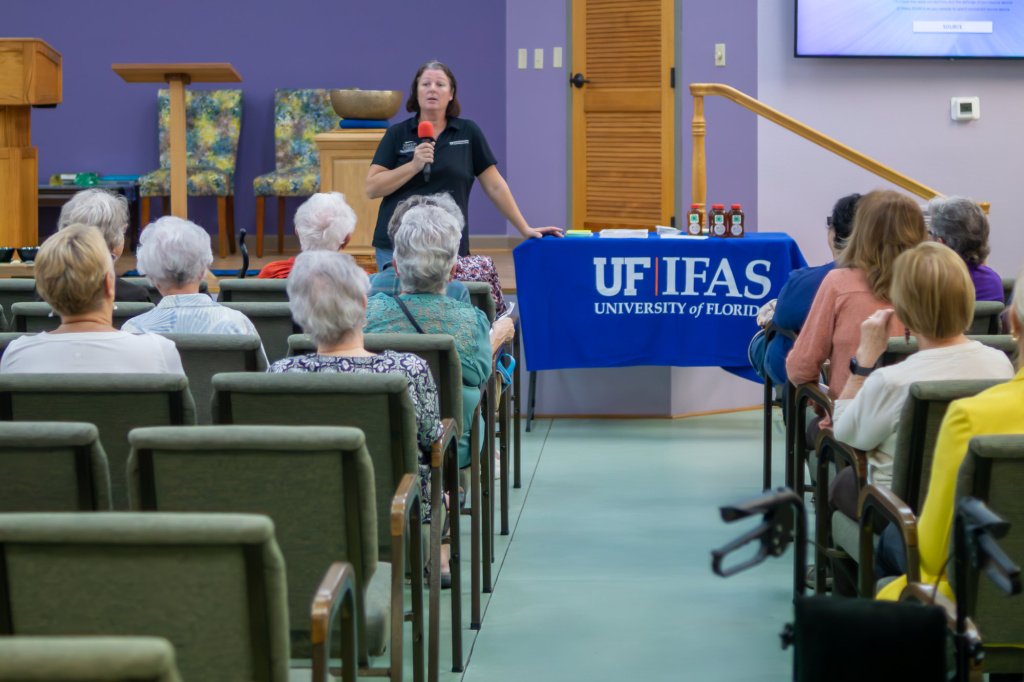
On Thursday, November 12, our November Forum welcomed Maxine Hunter, Agriculture and Natural Resources Agent with UF/IFAS Extension Marion County, for “Bees, Butterflies, Bats: Why Pollinators Matter in Florida.” Maxine works with beekeepers, small farmers and the general public on pest management, animal health and natural resource issues. A local beekeeper joined her, and a potluck followed.
What homeowners can do
Maxine’s message was that ordinary homeowners can do a great deal for pollinators. In her words:
“Just the fact that we have so many beneficial pollinators here, including honeybees, and there’s many ways that we can help homeowners promote and help them be successful by planting, whether it be wildflowers, other pollinator plants, or nectar plants, and supporting our wildlife throughout the year and different varieties of wildlife as well.”
“Whether it be insects or hummingbirds or butterflies, whatever it might be, there are so many things that we can do by using good landscape practices that promote good health for them.”
4-H, and the honey
Maxine also spoke about 4-H. “I do an insect group,” she said. Each year the kids pick a project, from insects to livestock to sewing, and work through it with a workbook and a mentor.
“They learn, they get mentorship through both their club leader and their peers, and I will tell you, these are some of the best kids I’ve ever worked with, and I work in the public schools a lot. It’s a great group of kids.”
The clubs run their own meetings by Robert’s Rules, with a president, vice president and secretary, and the members vote on how to spend the money their fundraisers bring in. Members can show at the Southeastern Youth Fair in February, and older members can go on to national competitions, with Marion County clubs helping to pay for travel and registration.
The honey for sale at the forum came in vials with the 4-H symbol on them. “So they do support these children,” Maxine said, “so if you want to buy honey, this is a good time to do it.” And the four H’s? Head, Heart, Hands and Health.
To learn more about 4-H in Marion County, visit Marion County 4-H.
Plants that feed pollinators
Maxine’s handouts included this list of common pollinator plants from UF/IFAS Extension and the Florida Master Gardener Volunteer program:
- African Blue Basil
- Anise Hyssop
- Aster
- Beautyberry
- Black-eyed Susan
- Blanket Flower
- Bottlebrush
- Chaste Tree
- Coral Honeysuckle
- Coreopsis
- Cosmos
- Georgia Calamint
- Goldenrod
- Passion Flower
- Pentas
- Purple Coneflower
- Red Rocket Russelia
- Rosinweed
- Salvia
- Stokes Aster
- Swamp Sunflower
- Verbena
- Yellowtop
- Zinnia
For more pollinator plants, visit FlaWildflowers.org or gardeningsolutions.ifas.ufl.edu.
Now is the time to sow wildflowers
A guide from the Florida Wildflower Foundation, also in the handouts, explains how to start a wildflower garden from seed. Its timing is good news for anyone reading this in the fall: generally, wildflower seeds can be sown between mid-September and mid-January.
A few of the guide’s twelve steps:
- Choose a site that is sunny most of the day, has well-drained soil and is free of weeds.
- Make sure the seeds touch the soil, but cover them no deeper than 1/8 to 1/2 inch. Most seeds need light to germinate.
- Be patient. Some species germinate quickly; others may rest in the soil for three to four months and come up in early spring.
- Do not fertilize. Many of Florida’s native wildflowers are adapted to poor soils.
- Wait until the seeds have matured before you mow, so the flowers can reseed themselves.
The Foundation also suggests that we:
- Landscape with Florida native wildflowers and plants.
- Stop using pesticides, which harm bees and other beneficial insects.
- Stop using fertilizer, which harms waterways and lakes.
- Ask our county to preserve roadside wildflowers.
- Work with lawmakers to preserve and conserve natural resources and lands.
Seeding dates for your part of the state, and much more, are at FlaWildflowers.org.
Where to buy native plants
From the handout “Central Florida Nurseries that carry Native Plants”:
- Anson Nursery, Lecanto, (352) 628-4554
- Blue Star Nursery, Hawthorne, (352) 481-3300
- Garden Gate Nursery, Gainesville, (352) 376-4992
- Goldenrod Meadows, Ocala, (713) 344-3746
- Green Isle Gardens, Groveland, (407) 948-8980
- Green Market Nursery, Gainesville, (561) 252-1651
- Grow Hub, Gainesville, (352) 275-7144
- Grumbles House, Dunnellon, (352) 465-1460
- Tower Hill Nursery, Ocala, (352) 216-4263
- UF/IFAS Marion County Master Gardener Nursery, Ocala, (352) 671-8400
Ask a Master Gardener
UF/IFAS Extension Marion County’s Master Gardener volunteers answer gardening questions at the Main Plant Clinic, 2232 NE Jacksonville Road in Ocala, Monday through Friday from 10 a.m. to 2 p.m., (352) 671-8400. They also hold regular clinics at the Belleview, Dunnellon and Forest libraries, the On Top of the World Farmer’s Market and the Marion Oaks Recreation & Fitness Center.
Their demonstration gardens are open to the public every day. Their plant sales specialize in native, pollinator and Florida-Friendly plants. Save the dates: the Spring Festival, which they call the largest plant sale in the region, March 13 and 14, 2027; the Spring Sale, Saturday, May 8, 2027; and the Fall Sale, Saturday, October 2, 2027.
Learn more at sfyl.ifas.ufl.edu/marion/master-gardeners, or follow @MarionCountyMasterGardeners on Facebook and Instagram.