Deadline for submissions to the next TriUU Newsletter will be March 23, 2026.
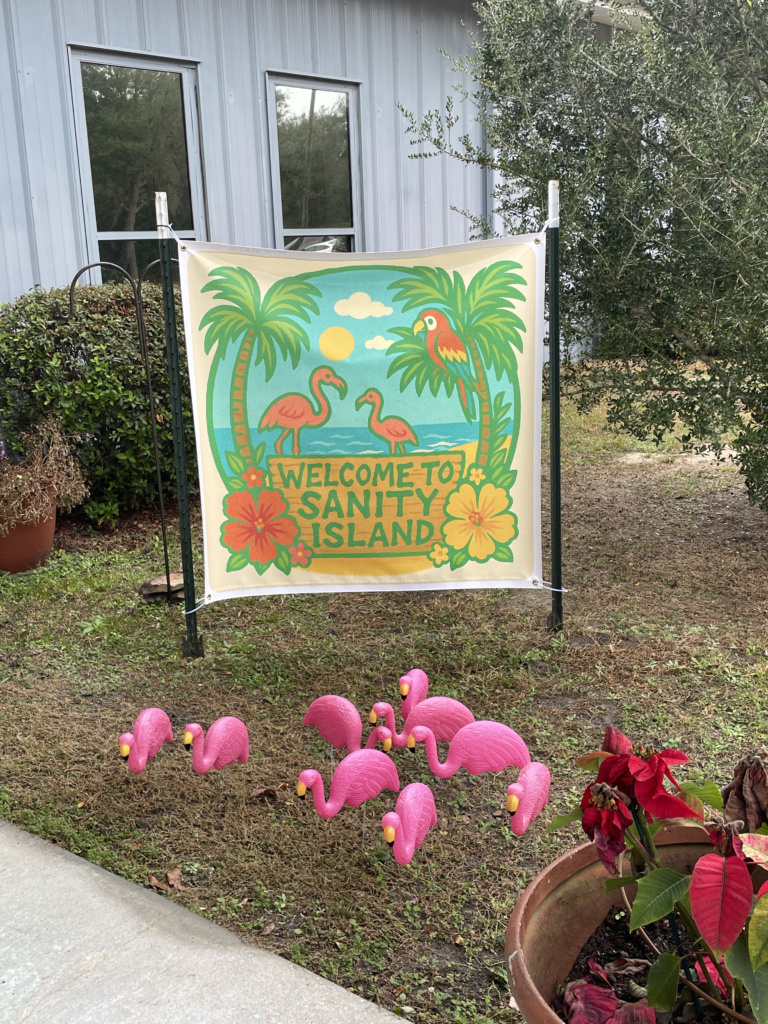
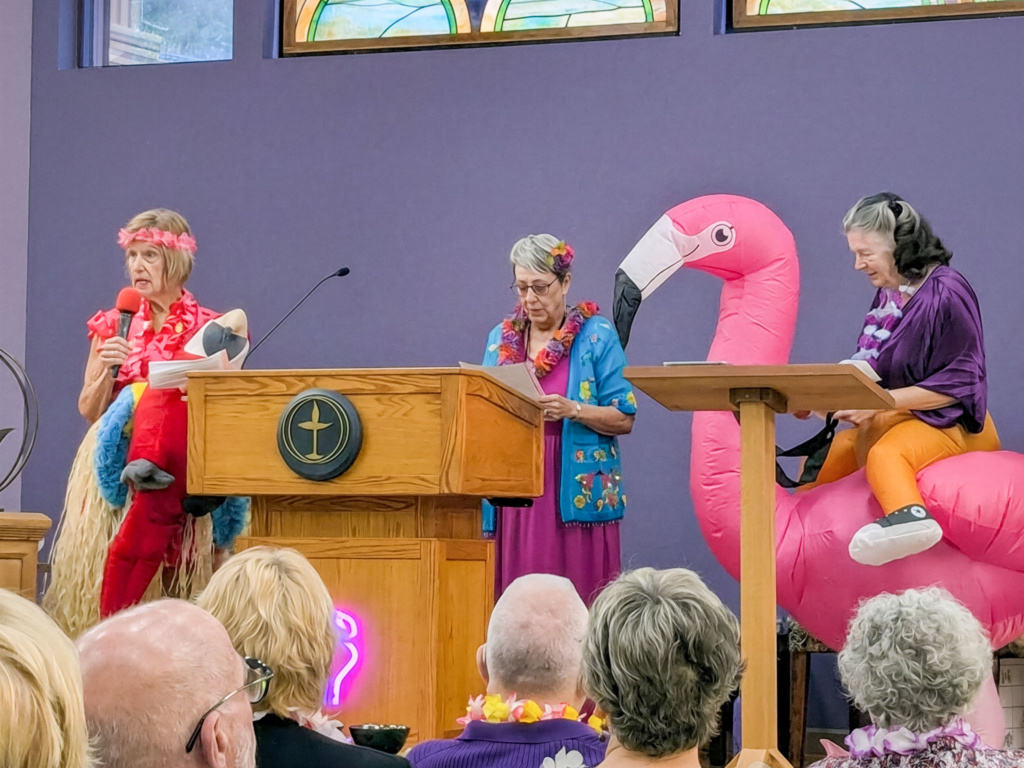
Welcome to Sanity Island!
Welcome to Sanity Island!
Summer is gone, and the winter holidays have passed. Is it time to take a trip to a tropical island?
How about considering a staycation? I know of the perfect spot. It is a welcoming locale, filled with warmth and acceptance. Your voice is heard, and you can speak without fear. Dress can be casual or fancy—your choice. Meals are always delicious and eclectic. New adventures are a constant, while the comfortable feel of home is always present as well.
Where is this paradise? TriUU, of course.
Help us continue our community outreach, provide assistance to our members, hear new perspectives, and share our concerns—all within our welcoming space.
To continue these services and more, please remember to give your annual pledge as soon as you can. Pledges may be placed in the pledge box in the lobby or made electronically via our website at www.TRIUU.org under the Donations tab.
Our goal is once again to reach $190,000—though more would be wonderful.
Although the last day to turn in your pledge is March 1, how about beginning your journey to our sane sanctuary today?
VOL. 3 ISSUE 2 - FEBRUARY 2026
WORSHIP SERVICES
February 2026's theme is "EMBODYING RESILIANCE."
February 1:
The Reverend Kristina Spaude
"Active Hope"
Drawing on the wisdom of Joanna Macy and Chris Johnstone in Active Hope: How to Face the Mess We're In Without Going Crazy, we will explore this month’s spiritual theme of “Embodying Resilience.”
February 8:
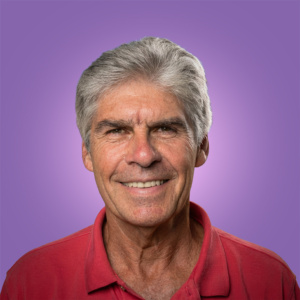
Rev. Dr. Howard Roberts
"An Autobiographical Chat"
Rev. Howard will share his journey from Biblical literalist to critical thinker as he continues learning what it means to be human.
February 15:
The Reverend Kristina Spaude
"Seasons of Resilience"
The Christian liturgical season of Lent and the Muslim month of Ramadan both begin this week. We will consider what these sacred times might teach us about practicing resilience.
February 22:
The Reverend Kristina Spaude
"Embodying Resilience: Practices"
The word resilience gets used a lot these days. We’ll explore what it means, including practices and tools that can help us cultivate it in our lives.
VOL. 3 ISSUE 2 - FEBRUARY 2026
MESSAGES
Message from Rev. Kristina
I've been thinking lately about a story a colleague once shared. They were in a congregation that said they wanted the minister there, but the minister often felt like things weren't quite right. One example they shared was of a congregant who regularly seemed disappointed and frustrated with the minister, although the minister had no idea what they had done to merit this.
There was a group gathering once, near the end of the minister's time with the congregation, as it turned out, and a conversation unfolded in the group about what the roles of the minister and congregation -- both as a whole and as individuals -- were. In that conversation, the congregant said that the minister never did their job. Surprised, the minister asked what they meant. The person replied that when they were growing up, their family's minister would stop by for dinner sometimes. This minister never did, and therefore, they weren't doing their job. I've wondered if the minister of their memory actually showed up uninvited, or it just seemed like it to the child.
The congregant had never invited the minister to dinner, only faulted them for not meeting expectations that the minister (or anyone else) was aware of. It didn't occur to the person to express their expectation to the minister, or to extend an invitation.
We all experience this kind of mismatching of expectations throughout our lives -- during the holidays this happens for many people, but at other times as well. Sometimes there are real failures -- I'm thinking about how my father wasn't told he'd had a heart attack last year by any of his medical care providers. Sometimes it's that we assume there has been communication about something when there has not been. Sometimes we are the minister, sometimes we are the congregant. When things seem not quite right, it’s worth asking about what our (and their) expectations are.
James Luther Adams wrote that, “Church is a place where you get to practice what it means to be human.” And thank goodness for that, because we have a place where we get to practice and be held in Love, even when we mess it up, and then try again.
As always, I look forward to seeing you at church or connecting with you otherwise.
In faith and service,
Rev. Kristina Spaude (she/her)
President's Message from Cindy Grossman, President of TCUU
Be Part of Our UU History — Attend Our Annual Meeting on Sunday, March 1.
Did you know that by participating in an annual meeting, you are part of a long tradition of Unitarian Universalists Congregations?
Both Unitarians and Universalists have centuries long histories of non-hierarchical, congregational polity, in which authority resides not in bishops or centralized bodies but in the gathered congregation itself. From the Puritan meetinghouses of 17th century New England to the Universalist conventions of the early American frontier, these movements developed democratic, lay-led structures in which congregations called their own ministers, owned and managed their own property, adopted their own bylaws, and held annual meetings to elect leaders and approve budgets.
Our annual meeting is scheduled for Sunday, March 1, 2026. The meeting will begin at about 10:30 AM allowing members to have light refreshments immediately following the 9am worship service.
To conduct our annual business, we need to have a quorum of members present. Each member will be asked to sign-in at the membership desk and receive a card that permits them to vote. To be a voting member, our bylaws say that you must have signed the membership book at least 30 days before the meeting and have made a pledge and a financial contribution of record to the congregation on an annual basis. (This requirement may be waived by the minister where special consideration is warranted.)
As per our bylaws, members who participate on Zoom will also have an opportunity to vote by a show of hands. It is essential that those members keep their video on during the meeting so that their votes may be counted. At least two weeks before the meeting, you will receive the official meeting notice. This will include the agenda for the meeting, as well as a slate of nominated candidates that you will be asked to elect. All members will also receive in separate emails the proposed budget and the minutes from the previous annual meeting.
Larry Cooper has agreed to serve as our parliamentarian so that he can advise the meeting facilitators on accepted practice using Roberts Rules of Order as a guideline. It is important to remember that Roberts Rules are there to give everyone an opportunity to be heard and participate fairly. Properly used, Robert’s Rules supports the democratic values of UU congregational polity by protecting minority rights and helping us make decisions efficiently.
The key is to keep the rules in service of participation rather than procedure. When the procedural machinery stays in the background, the annual meeting remains democratic, respectful, and spiritually grounded, rather than bogged down in technical motions. The last thing we want is a long boring meeting where members begin to leave, and we lose the quorum that is necessary to perform our responsibilities.
This year we will elect three new board members and two members of the nominating team. We will also adopt our operating budget for 2026-2027.
Lastly, under “Old Business” we will reconsider a proposal from the membership team asking us to change our bylaws to reflect the covenantal values promoted by the Unitarian Universalist Association. These are the values that are featured on the front cover of our Weekly Order of Service and detailed on the back cover. (Many of us remember the values through the acronym JETPIG: Justice, Equity, Transformation, Pluralism, Interdependence and Generosity) with the central guiding principle of LOVE as the unifying core.
Although only members and associate members may vote, friends of the congregation and visitors are always welcome to observe the proceedings.
Thank you for participating in this important annual function of our beloved community. We appreciate your initiative to be part of our legacy.
Featured in this article
Larry C.
VOL. 3 ISSUE 2 - FEBRUARY 2026
WELCOME TO UNITARIAN UNIVERSALISM
Living the Dream: Unified in Purpose, Committed to Change Dr. King’s Dream
The Reverend Kristina Spaude
UUCLC hosted an ecumenical service celebrating the Rev. Dr. King, Jr. and linking his legacy to the importance of DEI today. Many weren’t able to attend, so I thought I’d share my remarks here.:
It is possible, if not likely, that many of you here today who are not my congregants had not heard of Unitarian Universalism before coming here and do not know who we are as a faith. We come from two Christian denominations, the Unitarians and the Universalists, who came together in 1961 to form a new faith. Though we come from these two traditions, we are no longer bound by them, and we welcome people from a variety of faith and no faith backgrounds and beliefs into our congregations. The Love we believe in is large enough for all of us.
Our national organization, the Unitarian Universalist Association, is headquartered in Boston, as our deepest theological roots are there, and trace back to the Pilgrims and the Puritans establishing communities in the area.
This is relevant to today’s service because though we aren’t well known, Rev. Dr. Martin Luther King, Jr counted Unitarians and Universalists among his colleagues and friends, perhaps from his time at Boston University. We were among those on whom he could count when he called for clergy and people of faith to respond to his actions.
King said often that, "The arc of the moral universe is long, but it bends towards justice,” and President Obama added the caveat that the arc does not bend of its own accord, but because we do the work of bending it.
They are familiar words, and they were adapted from one of our ancestors, the Unitarian pastor and abolitionist Rev. Theodore Parker, who preached with a loaded gun in his pulpit as he spoke the heresy of abolition and who said, “I do not pretend to understand the moral universe. The arc is a long one. My eye reaches but little ways. I cannot calculate the curve and complete the figure by experience of sight. I can divine it by conscience. And from what I see I am sure it bends toward justice.”
Unitarian Universalism in its former iterations was a faith that helped shape King and his views for a better world and how to get there. 10 percent of our clergy initially showed up when he called us to Selma, and ended up with a quarter of our clergy there, along with many lay people.
And it was the murder of our own Rev. James Reeb, a white pastor, in the march from Selma to Montgomery in 1965 that was the final necessary impetus for Johnson to sign the Voting Rights Act. King gave the eulogy at his memorial. King said that Reeb, “symbolizes the forces of goodwill in our nation. He demonstrated the conscience of the nation. He was an attorney for the defense of the innocent in the court of world opinion. He was a witness to the truth that men of different races and classes might live, eat, and work together as brothers.”
So it is in our legacy to take seriously King’s calls for justice for all people. King charged us – we UUs – not to sleep through the Revolution. (Ware Lecture, 1966) Although we have done well at showing up, I’ll be honest. We haven’t always really understood the assignment beyond this. We have failed many times in our efforts. But as I always say, we at least usually try, and we dust off and try again.
I know we didn’t come here for a UU history lesson, but I think our journey is important to consider today. Our journey has been similar to that of our society on the whole. It’s the context for King’s vision. We have so much work still to do.
King’s life and legacy were devoted to racial justice. Born into the Jim Crow era, the reincarnation of enslavement that followed Reconstruction, King knew the hardships of his Black kin and their communities. It was never just segregation, but the violence of words and actions that shaped their lives from cradle to grave, and, if we’re honest, from conception through burial.
It was devastating. And so King committed himself, his life, his work to advocating for another world. A world that he dreamed that “that [his] four little children will one day live in a nation where they will not be judged by the color of their skin but by the content of their character,” that “one day right there in Alabama little black boys and black girls will be able to join hands with little white boys and white girls as sisters and brothers.”
King knew he would not live long enough to see his dream fulfilled, and despite the Black excellence, Black brilliance, Black resilience, and Black diligence we continue to witness to today, we might agree that progress has stagnated, and more recently, reversed.
We here in Florida and across this country have seen how legislation and policies that once promoted Diversity, Equity, and Inclusion in all parts of society have been rolled back, and our practices with them. The government no longer supports this vision, removing books from shelves and pages from websites and funding from organizations and agencies whose work was once to balance out the odds stacked against the oppressed and marginalized.
In doing so, we are failing our present and our future while denying our past. We are destroying the legacy King so carefully crafted for us to follow.
At an interfaith gathering once, an imam quoted from the Qu’ran, Surah 49:13, “O humanity! Indeed, We created you from a male and a female, and made you into peoples and tribes so that you may ˹get to˺ know one another.”
For if we, for the theists among us, are all made in the likeness and image of G-d, the only way we can begin to hope to understand G-d in their fullness and greatness is by knowing each other. Our differences show us that we have much to learn not only in being together but appreciating G-d’s breadth and depth, not to speak of their Love for us. Our human minds can only begin to conceive of G-d if we hold all of us together in our minds.
Our diversity is humanity’s greatest blessing. When we turn away from it, when we stamp out diversity, equity, and inclusion, we do so at our peril. In King’s words, “Injustice anywhere is a threat to justice everywhere. We are caught in an inescapable network of mutuality, tied in a single garment of destiny. Whatever affects one directly, affects all indirectly.”
May we work together to make the most beautiful garment possible. King said, “Our goal for America is freedom.” Let’s find inspiration to return to the work. It is our duty.
MEMBER SPOTLIGHT
THIS MONTH'S TRI-UU MEMBER SPOTLIGHT: BRUCE TWISS
Bruce Twiss Found His Purpose While Still a Child: Save Others
Bruce Twiss, TriUU’s vice president and leader of the Building and Grounds Team, was once required by his employer to take a personality profile test. The results: ”Perfectionist.” Ironically, this assessment brought criticism from his superiors on the job, but he happily accepted it. He saw it as recognition of his boyhood resolve to educate himself in a myriad of ways to save people from life’s perils.
At the time he took the test, his responsibilities were to keep a hospital’s medical devices, generators, alarms, and environmental systems in reliable working order. “You want everything that patients and medical staff depend on to work every time,” he said, “not most of the time.”
Childhood
Bruce was a World War II baby, born in the small blue-collar city of Peabody (“PIbbity”), MA, known for leather processing. His father was a low paid maintenance worker in a tannery; his mother was a homemaker. When the factories shut down for two weeks every summer for employees’ vacations, all the maintenance workers and millwrights in the area had no vacation. They worked extended hours every day to make major repairs and upgrades to production equipment.
Dire consequences became a constant threat to him after his father contracted tuberculosis when he was in grammar school. The disease sent moneyed sufferers to warmer climates. But the little Twiss family fell into poverty after their wage earner was locked away in a TB Sanatorium for almost three years. No effective treatment existed. “There was a stigma with TB,” Bruce said. “People avoided my mother and me.”
The two of them struggled to survive on what passed for welfare in post-war America. Their fates often rested on charity—holiday food baskets delivered by service organizations such as the Lions and Elks Clubs. Warm coats arrived every winter, along with coal for the furnace approved by a city councilman who signed a “fuel order”. Eventually, his grandfather (also a tannery worker) moved in with them to help financially.
His father was sent home after surgery to remove his infected lung. He found work in a tannery. A while later Bruce’s mother died when he was 13. Then his father passed when Bruce was 17. He was taken in by an aunt and uncle; “They were good to me,” he said.
Anyone else might have become bitter, but Bruce, an introspective only child, was grateful for any help and grew strong in his ambition to pay back and save others. He worked days and went to night school where he took not just one course but 20 plus years of courses, honing the skills that would help him fulfill his ambition.
Unitarian Universalists
His wife introduced him to Unitarian Universalism 40 years ago; she had found her niche as a member of a UU choir. For five years they attended a congregation in Attleboro, MA., and then in 1991 they attended the UU church in Greensboro, N.C., where Bruce pitched in at the once-a-month soup kitchen, served on task forces, on the building and grounds group, was an usher, and volunteered to assist with church events.
TriUU was his third venture, starting in 2008. After about three years he withdrew for a time because of his wife’s health and mobility issues. After she passed in 2019, the venerable Reverend Janet reached out to help him manage his grief.
Suzanne Seitz, then Building and Grounds Team leader, asked him to join B&G. He told her, “I’ve retired from all that, but I’ll try to help.” He worked with the Team and with John Seitz, known for his artistry in TriUU’s Chalice Room.
Bruce is most visible at TriUU where he is serving a second term as Vice President, facilitating the Program Council, and as current leader of Building and Grounds.
Here he’s in his element, making sure everything is working perfectly. In addition, he’s an usher, safety monitor, and offering counter, duties shared by other members. (New members take note: volunteers are always welcome).
Overachiever at Work
For 44 years Bruce held the title of Hospital Plant Operations Director and Safety Officer. First at a 500-bed Boston Harvard Medical School Teaching Hospital for 21 years, then at a 480-bed Greensboro Rehab/Skilled Nursing facility for three years. A hospital in Greensboro sought his help. He was there for 13 years, and then transferred to an Ocala hospital to correct deficiencies in preparation for an accreditation survey. He remained there for seven years and retired in 2014.
Giving of Himself, Literally
Bruce has donated eight gallons of blood over the years. His is the most common type, shared by 80 percent of the population. He has been summoned many times to donate blood for patients receiving transplants. Over the years, he also volunteered for four clinical trials.
Ham Radio Rescues
Of course, Bruce would have a hobby that would save lives. Since 2006 he has been a ham radio operator, volunteering at first with Guilford County, NC, Emergency Management. His fellow ham radio operators, a fraternity that steps up in times of natural disaster, are instant friends whenever they connect through the airwaves. Bruce works with them to participate in emergency management activities. He brought his ham radio skills to Ocala in 2008 when he joined the Hospital Emergency Communications Team (HEC) and the Sheriff’s Marion County Emergency Radio Team (MERT) and became the liaison between the two organizations. They came together from Fort Meyers, Dunnellon, and Ocala in 2022 during Hurricane Ian that wiped out 911 communications and flooded Ft. Myers. A 65-year-old woman was stranded on her roof in rising waters at 11 p.m. Her grandson in the area, also a ham, was aware of her plight and sent out an emergency radio message. A volunteer MERT ham operator working in Dunnellon’s emergency center picked up the call and radioed Marion County emergency center. With some difficulty, officials there contacted a rescue team near Ft. Myers that responded and saved the woman.
After retiring in 2014 Bruce joined On Top of the World’s “Community Emergency Response Team. One of the things Bruce loves about being a ham radio operator is that ham is open to everyone, treats women as equals, and has no minimum age limit. It is a completely egalitarian pursuit.
Service Organizations
Remembering the food baskets brought to his mother’s door by service organizations when he was a growing boy, Bruce first joined the Lions Club in Everett, MA, that provided services to the local community. After moving to Foxboro, MA, he joined the Elks Club in Mansfield, MA, where one of their charitable services is collecting food for the poor at holiday times. Bruce delivered food baskets and saw mothers crying with gratitude and relief and children bouncing about, squealing in anticipation of generous meals.
In Greensboro, NC, Bruce was a member of the Merchant’s Council’s “Gangs and Graffiti Task Force”. This group recruited volunteers and provided supplies regularly to remove gang graffiti around the city. Most notably, the Council provided funds and transportation for laser removal of tattoos for female gang members, in a rehabilitation effort.
Recent Awards
Reading from four of the tributes he has received locally in the past twoyears:
On Top of the World: “You are being honored for your commitment to the Community Emergency Response Team. Your experience in amateur radio was crucial in acquiring the necessary equipment for team communications during disasters. You also provided valuable training to enhance members’ skills for community service.”
Marion County Emergency Radio Team: Accepted the executive leadership position of HEC Liaison…coordinating and facilitating interaction of emergency communications for all hospital and medical facilities throughout Marion County.
HCA Florida Ocala Hospital: “You are being recognized as an outstanding volunteer…your commitment to the care and improvement of human life…your demonstration of compassion, respect, and attention to our patients’ needs.”
Bruce has earned four FEMA certifications and won other awards during his career. He is especially honored by receiving a “Caring Award” by patients of the Greensboro hospital.
And This Tidbit
Salem, MA, the home of one of his ancestors, is now a tourist stop that Bruce has visited. In 1692 Rebecca Nurse--a respected and deeply religious woman--was accused of being a witch and was hanged at 71 years of age.
She is featured in a 1953 play, “The Crucible” by Arthur Miller, and in movies in 1996 and 2002.
By Marie Lujanac
Contributor: Marie Lujanac
Featured in this article
Suzanne S.
John S.
MEMBER SPOTLIGHT
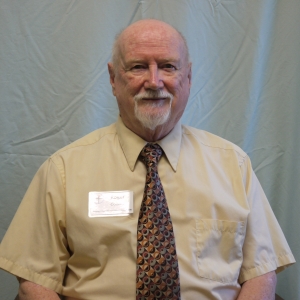
Dr. Roger Cooper, Psy. D.
Dr. Roger Cooper, Psy.D., was born and reared in Rochester, New York, home of the Eastman Kodak Company where he held his first job as a process film inspector. He attended
Whittenburg College in
Springfield, Ohio and then Hammond Divinity School, after which he served as a Lutheran minister for twenty years in Oaklawn, Illinois.
At the young age of 59, he decided to give up the ministry, which he had always seen as his mother’s plan for his life, and pursue his own calling in clinical psychology. He enrolled at Wright State University in Dayton, Ohio to earn his Doctorate and begin a new career teaching and practicing. His thesis was on the risk-taking behavior of motorcyclists, whom he cleared of any suspected pathology after finding no correlation between victims of accidents and diagnosed psychopathy, though his one experience on the back of a motorcycle in Germany in his college days had made him suspect otherwise.
Author of dozens of articles in professional psychology journals, he wrote a biography of Arthur Freedman, the pioneer of “active listening” in psychotherapy and one of his personal heroes. Through his psychotherapy practice, he has enjoyed the opportunity to help families heal from dysfunction in ways that were never available to his own family growing up and has witnessed many proofs of the interconnection of humans and all living things.
Roger has been married three times, the third time being the charm. He met his wife Julie at Wright State, where they knew one another professionally for many years before marrying in 1995. This past December, they celebrated their thirtieth wedding anniversary.
They are currently expecting the birth of Roger’s first great-grandchild, to join his family of seven grandchildren and five step-grandchildren. Roger’s son is a renowned teaching cardiologist at the University of Toledo, Ohio. His daughter works as a food-taster for General Mills in Minneapolis, Minnesota, though he says she has to spit out anything she tastes. An avid fisherman, he loves ice fishing up north and deep-sea fishing in Florida, Alaska and Hawaii. He once caught a 576-pound marlin on an excursion with his son in Hawaii, and says he has the photographs to prove it! Every morning, he and Julie enjoy completing the crossword puzzle in the newspaper, up through Thursday’s, after which they just become too difficult.
Introduced to Tri-County Unitarian Universalists by a friend in the Democratic Party in 2006 when the fellowship met in rented space, Roger became instrumental in the planning, funding and construction of our current campus in Summerfield. He is happy we have converted to solar power and sincerely hopes someday we can expand to include a large learning center. Every Tuesday at 4:00 pm he can be found participating in the online Open Discussion of Current News group, and invites anyone interested in recent events to join in and lend their voice. Sunday mornings he enjoys attending services via Zoom, and appreciates the opportunity to virtually raise his hand and offer comments along with the in-person congregation.
If you get a chance, please take a moment to thank Roger for his twenty years of fellowship and service, and if anyone would like a copy, he has written an essay giving his professional evaluation of the mental health of Donald J. Trump, which he will be happy to share with you upon request.
Amanda McWilliams - January 2026
VOL. 3 ISSUE 2 - FEBRUARY 2026
COMING SOON
The TriUU Book Club meets on February 23 at 1pm at TriUU.
The TriUU Book Club meets on February 23 at 1pm at TriUU. We will discuss On Earth We're Briefly Gorgeous by Ocean Vuong. Maria Kelly will be facilitating.
This book is a letter from a son to a mother who cannot read. Written when the speaker, Little Dog, is in his late twenties, the letter unearths a family’s history that began before he was born. At once a witness to the fraught yet undeniable love between a single mother and her son, it is also a brutally honest exploration of race, class, and masculinity. Asking questions central to our American moment, immersed as we are in addiction, violence, and trauma, but undergirded by compassion and tenderness, On Earth We’re Briefly Gorgeous is as much about the power of telling one’s own story as it is about the obliterating silence of not being heard.
On March 30 we will discuss Marriage at Sea by Sophie Emhirst. Gail Holmstrom will be facilitating.
This is a true story of Maralyn and Maurice Bailey, a couple who set sail planning to circumnavigate the globe in 1972. It is a story of love, obsession and shipwreck.
If you would like to receive book club emails, please contact garrisonnancy@yahoo.com.




 Rev. Dr. Howard Roberts

 Contributor: Marie Lujanac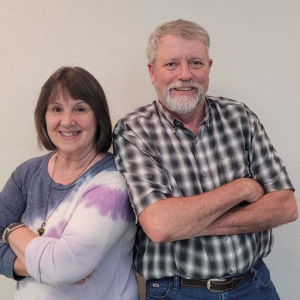
 Rochester, New York, home of the Eastman Kodak Company where he held his first job as a process film inspector. He attended